
Accredited by the National Board of Accreditation (NBA) under Tier-I
The Department of Electronics and Communication Engineering provides a dynamic platform where students don’t just learn—they innovate, collaborate, and lead. With active participation in IEEE, IETE, ISTE, and the student-led technical club VIVECA, students are continuously exposed to industry trends, emerging technologies, and real-world engineering challenges. From hands-on workshops and expert lectures to project expos, design contests, and industrial visits, every activity is designed to build practical skills and confidence. VIVECA empowers students to transform ideas into impactful projects, while IEEE chapters connect them to a global professional network. This vibrant ecosystem nurtures creativity, technical excellence, and leadership, enabling students to shape their future in the ever-evolving world of technology.
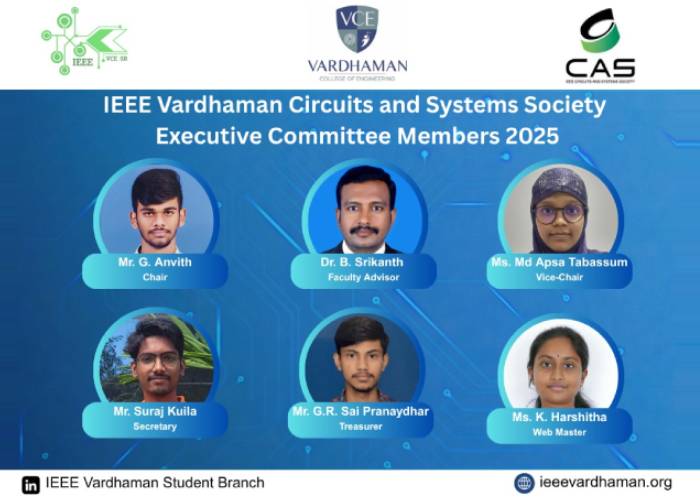
The IEEE CASS (Circuits and Systems Society) Vardhaman Student Branch Chapter is dedicated to promoting innovation, learning, and research in the areas of circuits, systems, VLSI design, embedded systems, and emerging electronic technologies. The chapter provides students with a dynamic platform to participate in technical workshops, seminars, design contests, and expert interactions with professionals from academia and industry. It encourages students to strengthen their practical knowledge, enhance design and analytical skills, and explore advancements in modern electronic systems and integrated circuit technologies. Through technical and professional activities, the chapter fosters creativity, collaboration, and research-oriented learning among students in the field of electronics and communication engineering.
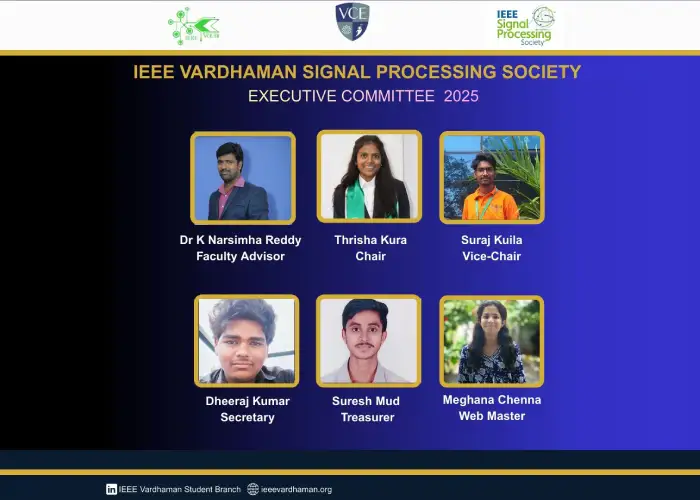
The IEEE Signal Processing Society (SPS) at Vardhaman College of Engineering, Hyderabad, is a vibrant student-driven community committed to exploring and advancing the world of signal processing. Signal processing forms the backbone of modern technology—powering innovations in communication systems, artificial intelligence, multimedia, biomedical engineering, and more.
Our society focuses on fostering technical excellence through seminars, hands-on workshops, research discussions, and real-world problem-solving challenges. By connecting students with experts and emerging technologies, we empower members to enhance their analytical, technical, and leadership capabilities while staying aligned with global industry trends.
The IEEE ComSoc Vardhaman Student Branch Chapter is dedicated to fostering innovation and research in the fields of communications and networking technologies. It provides a vibrant platform for students to engage in technical events, workshops, and knowledge-sharing sessions with experts from academia and industry. The chapter encourages students to explore cutting-edge advancements, enhance their professional skills, and contribute to the IEEE community. Through collaborative initiatives, ComSoc empowers students to drive meaningful impact in the evolving world of communications engineering.
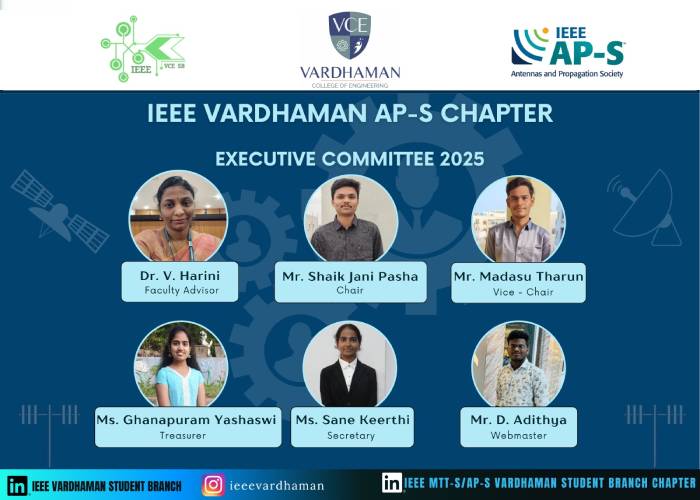
The IEEE Antennas and Propagation Society (AP-S) Vardhaman Student Branch Chapter was inaugurated in April 2025 under the IEEE MTT-S/AP-S/EMC-S Joint Chapter, Hyderabad Section. At the time of its inception, the chapter began with 35 enthusiastic student members, and it has now grown to an active community of over 60 members, making it one of the largest and most vibrant Student Branch Chapters under IEEE AP-S Region 10.
Although newly established, the chapter has demonstrated remarkable energy and initiative by organizing impactful technical events. Notably, it conducted the Distinguished Lecturer Program on “Biofriendly Antennas: Antennas Made of Recyclable Materials” by Dr. Sima Noghanian, CommScope Ruckus Networks, USA, and the “ANTENNOVATE—An Antenna Student Design Contest,” which attracted widespread participation from motivated undergraduate students.
Through these initiatives, the IEEE AP-S Vardhaman SBC has inspired numerous students to explore innovative antenna technologies, showcase their design talents, and earn appreciations and laurels at various platforms. With the continued enthusiasm of its members and support from the faculty mentors, the chapter aims to become a leading hub for antenna and propagation research and innovation in the region.
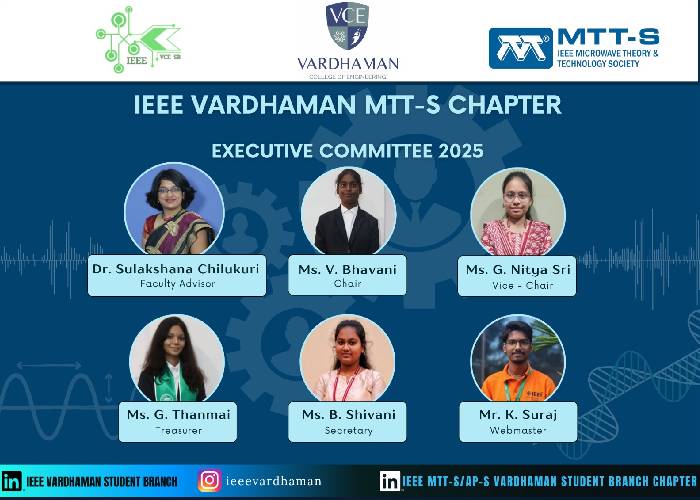
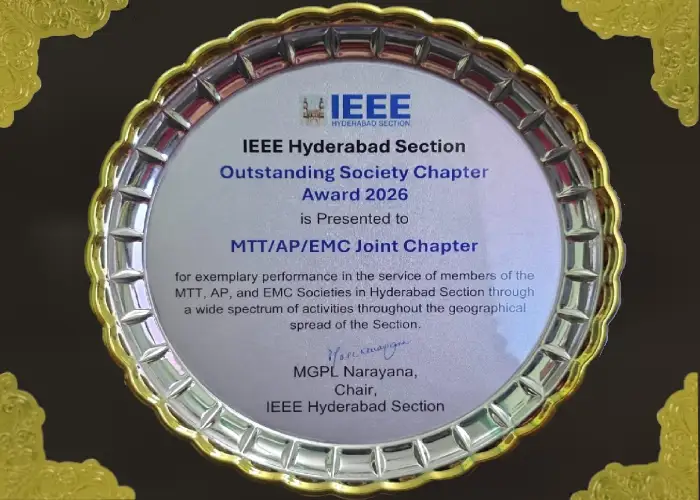
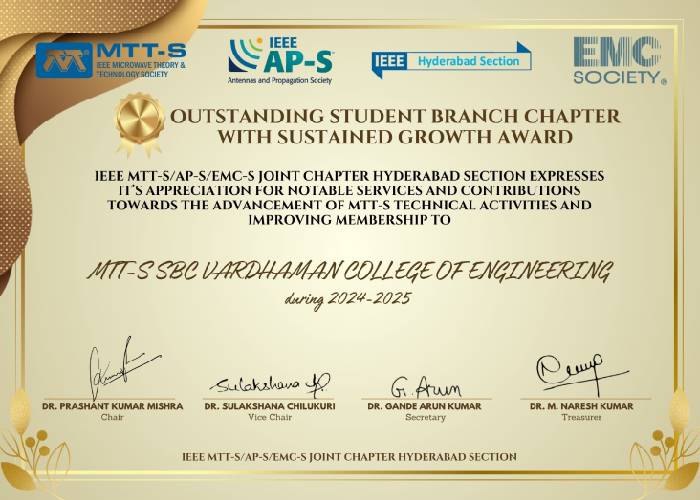
The IEEE MTT-S Vardhaman Student Branch Chapter was established in 2019 under IEEE MTT-S/AP-S/EMC-S Joint chapter, Hyderabad Section. The chapter is driven by the motivated student volunteers and members to increase the spread technologies, of microwave antennas propagation, & electromagnetic compatibility related knowledge and information among professionals and researchers. Our SBC with more than 100 members has received Outstanding Student Branch Chapter with Sustained Growth for the year 2025 from Joint Chapter Hyderabad Section and Super Large SBC Award for the year 2025 from MTT-S MGA. Also, our SBC student volunteers received Outstanding Chapter officers Recognition MTT-S R-10 2024 award at MAPCON 2024. Our chapter is proactive on several technical events, workshops for the benefit of student members.
The IEEE Information Theory Society Vardhaman Student Branch Chapter is dedicated to advancing knowledge and research in the areas of information theory, coding, data communication, and signal processing. The chapter serves as a platform for students to participate in technical discussions, workshops, seminars, and collaborative activities that enhance analytical and problem-solving skills. It encourages students to explore theoretical foundations and modern applications of information and communication technologies through academic and research-oriented initiatives. By promoting innovation, interdisciplinary learning, and professional development, the chapter empowers students to contribute to advancements in communication and information engineering.
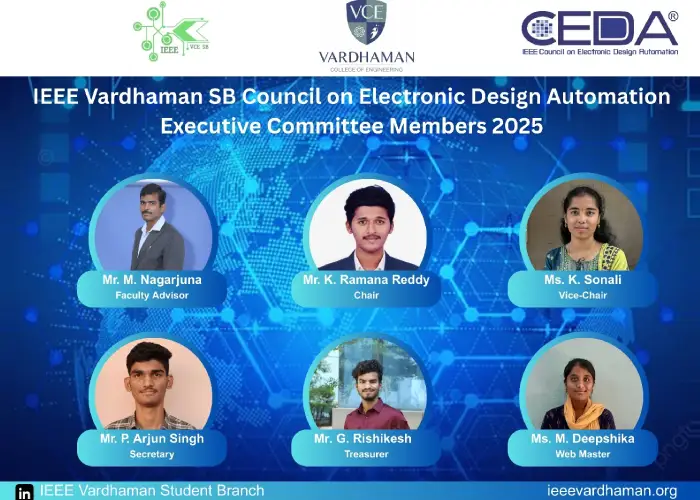
The IEEE Council on Electronic Design Automation (IEEE CEDA) Student Chapter at Vardhaman College of Engineering (VCE) is a dynamic platform that promotes learning, research, and innovation in the domains of VLSI design, embedded systems, and electronic design automation (EDA). Established under the aegis of the IEEE Circuits and Systems Society, the chapter provides students with opportunities to explore the latest trends in semiconductor technology, integrated circuit design, and automation tools used in modern electronic systems.
Through a series of technical talks, workshops, hackathons, and design challenges, the IEEE CEDA–VCE chapter nurtures technical competence and research aptitude among students. It also facilitates collaborations with industry experts, academicians, and research professionals, enabling students to gain real-world exposure and develop problem-solving skills aligned with current technological needs. The chapter plays a pivotal role in enhancing the innovation ecosystem at VCE, inspiring students to pursue advanced studies, research, and careers in the rapidly evolving field of electronic design automation.
The ISTE Student Chapter of the Department of Electronics and Communication Engineering promotes professional development, technical excellence, and continuous learning among students. The chapter organizes technical workshops, expert lectures, skill development programs, and training sessions that enhance students’ technical knowledge and professional competencies. It encourages students to participate in national-level technical competitions, seminars, and innovation activities, fostering creativity, leadership, and problem-solving skills. The ISTE chapter also supports faculty and students in adopting modern engineering practices, thereby strengthening academic excellence and industry readiness.
The IETE Student Chapter provides a platform for students to enhance their technical knowledge and stay updated with emerging trends in electronics and communication engineering. The chapter conducts technical seminars, workshops, industrial visits, guest lectures, and project-based activities in areas such as communication systems, embedded systems, VLSI, and signal processing. It encourages students to participate in technical paper presentations, research activities, and national-level events, thereby promoting innovation, technical competency, and professional development. The IETE chapter plays a vital role in bridging the gap between academic learning and industry requirements.
The Viable Innovators of Vardhaman Electronics and Communication Association (VIVECA) ECE Department Technical Association serves as a dynamic platform to enhance students’ technical skills, leadership abilities, and teamwork through student-driven activities. The society organizes technical fests, project expos, technical quizzes, circuit design competitions, workshops, and seminars that encourage innovation and practical learning. It provides opportunities for students to apply theoretical knowledge to real-world applications, collaborate with peers, and develop professional skills. The society fosters a culture of creativity, technical excellence, and interdisciplinary learning, helping students become competent, innovative, and industry-ready electronics and communication engineers.

The Department of Electronics and Communication Engineering (ECE) publishes Communiqué, a biannual technical newsletter that systematically documents the academic, research, and professional engagements of the department. Communiqué serves as an institutional knowledge repository, highlighting technical workshops, expert talks, industrial visits, faculty development programs (FDPs), research publications, funded projects, patent filings, student innovations, technical symposiums, and advancements in emerging domains such as VLSI design, embedded systems, IoT, signal processing, wireless communications, and artificial intelligence. The newsletter also comprehensively reports placement statistics, campus recruitment drives, internship opportunities, and higher education admissions, thereby reinforcing the department’s industry–academia interface and career-oriented training initiatives.
In parallel, the department publishes Techzine, a biannual magazine that captures co-curricular, extracurricular, and student-driven initiatives. Techzine provides a structured platform for students to showcase creative writing, technical articles in simplified form, project reflections, cultural activities, social outreach programs, leadership experiences, and departmental event highlights. It emphasizes communication skills, interdisciplinary thinking, innovation culture, and holistic personality development.
Collectively, Communiqué and Techzine function as strategic academic publications that reflect the department’s commitment to outcome-based education, continuous professional development, research excellence, industry readiness, and comprehensive student development, thereby strengthening the academic ecosystem and intellectual vibrancy of the ECE department